What are Continuations?
And why you should care!
Agenda
- Control flow
- Introducing CPS
- An Example
Control Flow
What does this code do?
def foo(a):
    res = ""
    if a > 100:
        res = bar(qux(a))
    else:
        res = baz(a % 7)
    print(res)

def bar(b):
    return b*9

def qux(c):
    return c % 10

def baz(d):
    return d*19
Control Flow
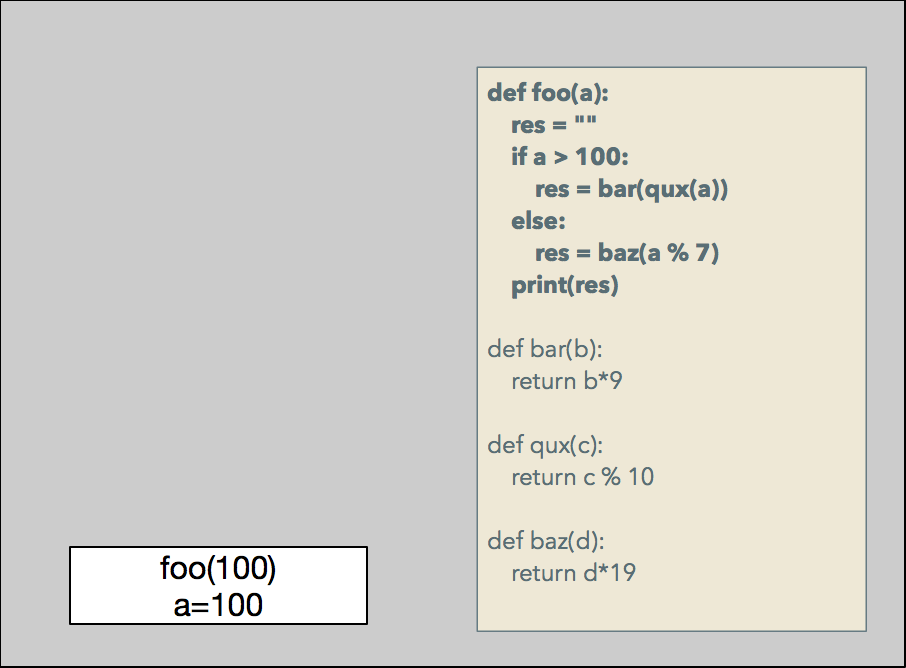
Running a program
Control Flow
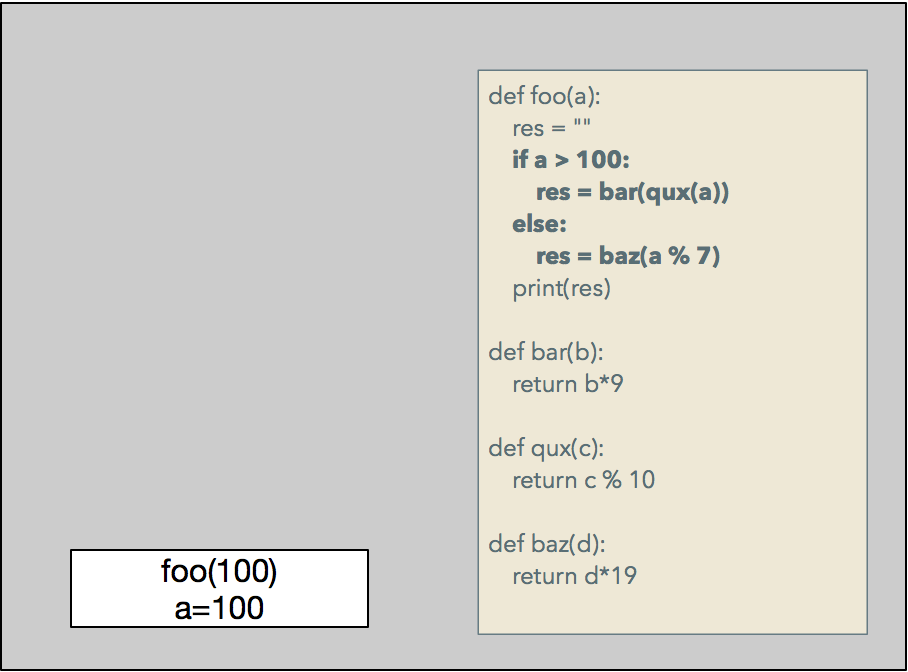
An "if statement
Control Flow
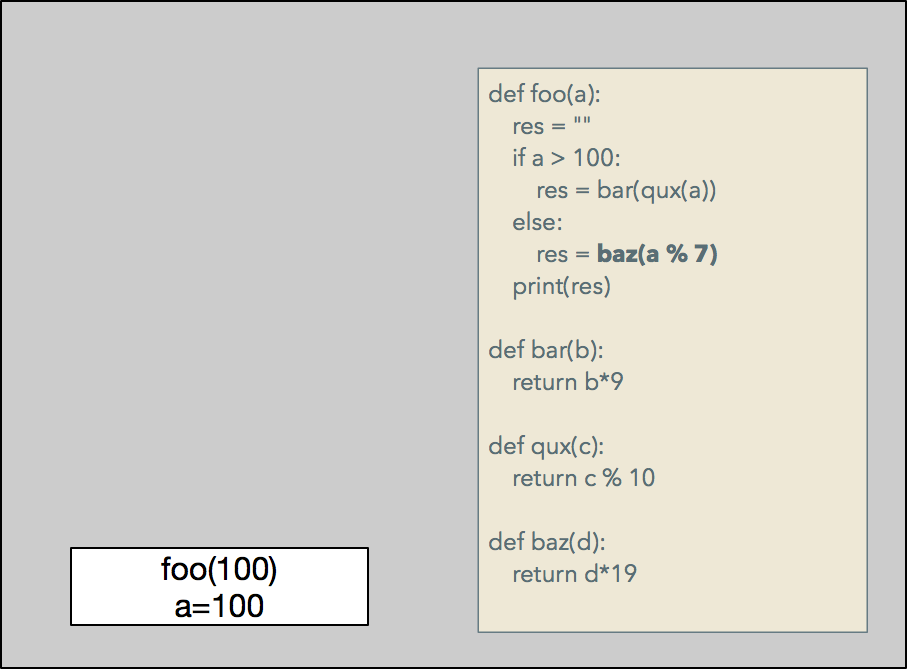
Calling a subroutine
Control Flow
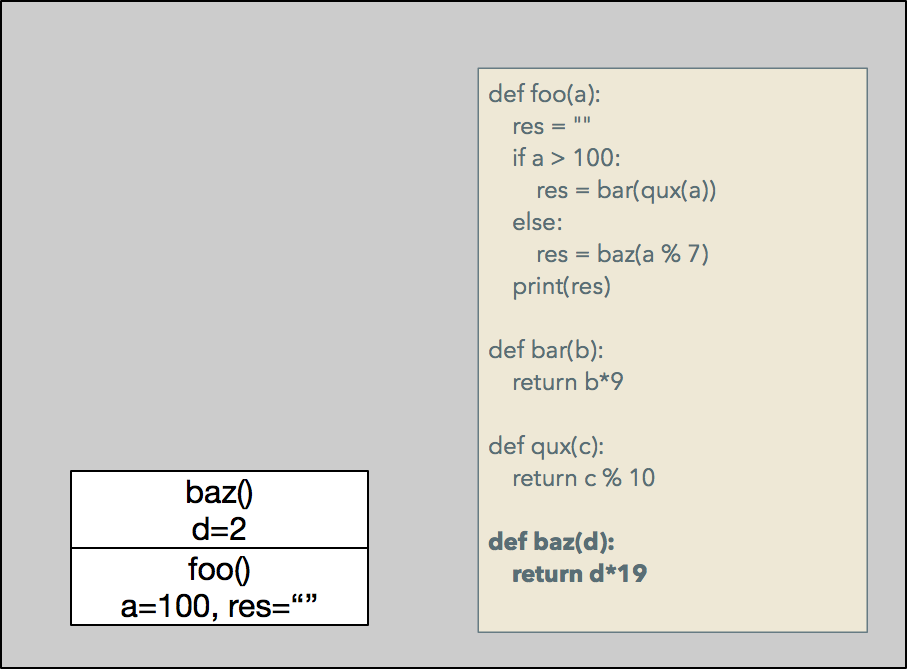
Entering the subroutine. Allocate a stack frame to "remember where we were"
Control Flow
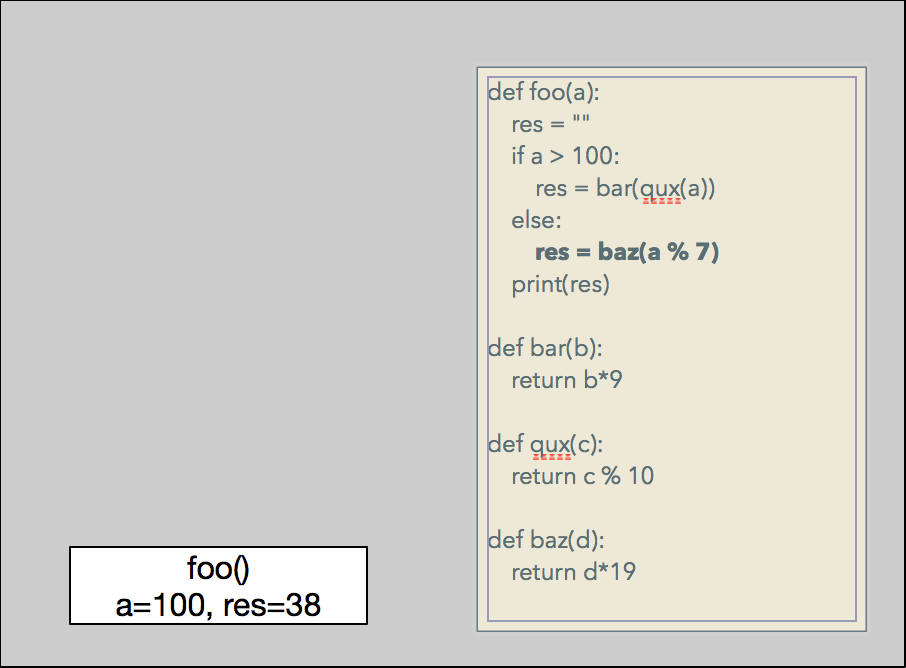
Return the value & pop the stack frame
Control Flow
- if
- try/catch
- case/switch
- while
- for
- GOTO
Control Flow
Its what happens next
What happens if you take away function return???
Continuation Passing
Here comes the headache
def foo(a, next):
    step = lambda b : bar(a, b, next)
    baz(step)

def bar(a, b, next):
    next(a + b)

def baz(next):
    next(42)
Continuation Passing
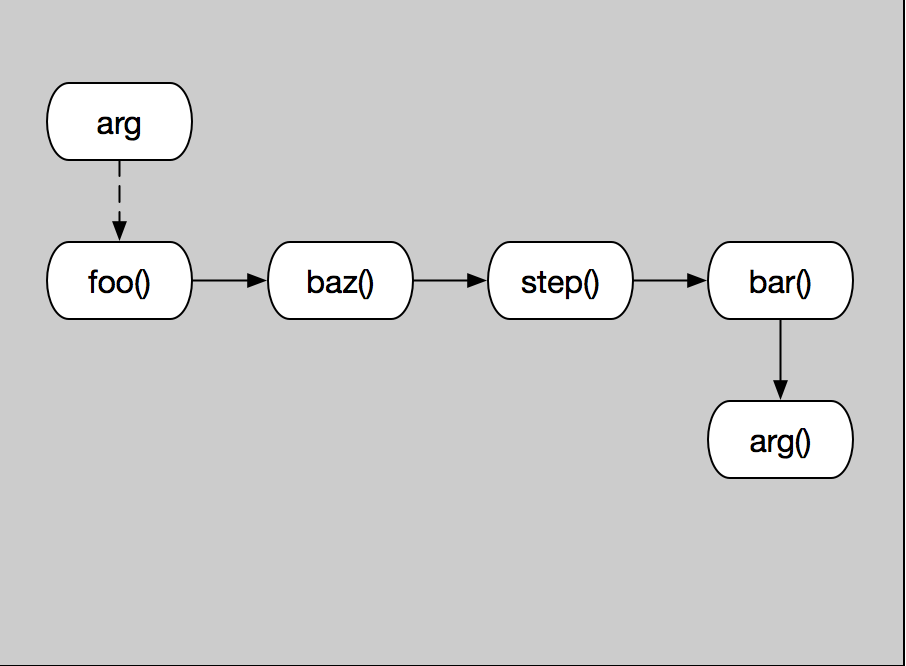
Explicitly declaring what happens next is equivalent to GOTO!
Continuation Passing
Why would you want this??
Implement new control flows
- Async tasks on a single-threaded runtime (JS Promises)
- Try/catch in a language without it
- Early return in a language without it
- Coroutines
An Example: Early Return
A continuation takes the form of (a -> r) -> r. This is a Functor, Applicative, and Monad
type Cont r a = (a -> r) -> rrunCont :: Cont r a -> r) -> (a -> r) -> rcallCC :: ((a -> Cont r b) -> Cont r a) -> Cont r a
An Example: Early Return
fun :: Int -> String
fun n = (`runCont` id) $ do
    str <- callCC $ \exit1 -> do
        when (n < 10) (exit1 (show n))
        let ns = map digitToInt (show (n `div` 2))
        n' <- callCC $ \exit2 -> do
            when ((length ns) < 3) (exit2 (length ns))
            when ((length ns) < 5) (exit2 n)
            when ((length ns) < 7) $ do
                let ns' = map intToDigit (reverse ns)
                exit1 (dropWhile (=='0') ns')
            return $ sum ns
        return $ "(ns = " ++ (show ns) ++ ") " ++ (show n')
    return $ "Answer: " ++ str